
21.11.2026–04.04.2027
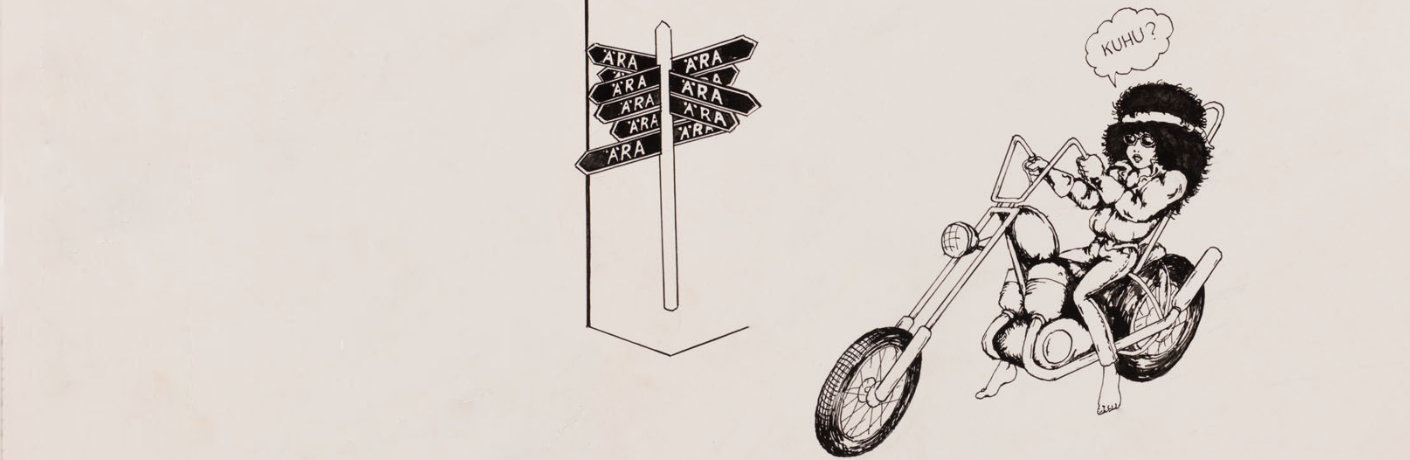
Andres Ader, also known by his nickname Zassa (1953–2020), was a caricaturist and comic artist whose character Alice became a cult figure in Estonia in the years before the restoration of independence.
There are only a handful of well-known comic characters in Estonian art history, and Alice is the only woman among them. A long-legged, buxom flower child with a great mass of black hair, Alice first appeared in public in 1974, at an exhibition by NAKS, the caricaturists’ collective of the University of Tartu, and in the pages of the magazine Noorus. Over the following dozen years, Alice appeared sporadically, mainly in the pages of the newspaper Edasi. Alice, who had by then grown even sexier, became a cult figure in the late 1980s, when a comic strip about her adventures appeared almost weekly in Edasi’s humour section Herilane from 1987 to 1989.
The exhibition in the project space of the Tartu Art Museum brings together a small, thematically curated selection of Alice comics published in Edasi, accompanied by Andres Ader’s original drawings from the collection of the Tartu Art Museum. The exhibition focuses on Alice’s backstory and explores the complicated relationships between Andres Ader as an author and the characters he brought to life (Alice, Zomby, Väike Värdjas, Detective Kivi, etc.).
Ader’s contemporaries have described his work as a caricaturist as an attempt to carve out his own safe corner of the world within an oppressive reality. Ader was by no means the only one to establish his refuge on the little island of independence created by the hippie movement that had reached Estonia through rock music.
In the wake of perestroika, Alice’s original flower-child anti-war stance, the misogyny characteristic of the era and the violent absurdity characteristic of Soviet humour become enriched with the nuances of the day-to-day politics of Estonia on the threshold of independence. The tank and the rocket, initially aggressors, transform into a military state system whose activities result in both ecological and cultural pollution. Yet Alice remains true to her roots, valuing spirituality above all, expressed through an ironic distrust of intellectuals and situations reminiscent of Zen paradoxes in which Alice repeatedly finds herself.
The exhibition Andres Ader. Alice Cooper in Wonderland is part of the exhibition series Tartu 88, which presents research-based exhibitions focusing on the most multifaceted moment in Estonian cultural history, immediately before the restoration of independence, and on the changes in Estonian culture in the decades that followed. The aim of the Tartu 88 series is to collect and research archives that are significant from the perspective of Estonian art history in the years before and after the restoration of independence.
Curator: Indrek Grigor
